


Spay and Neuter Cost in NYC
- Spay and Neuter Cost in NYC for Dogs and Cats in Queens
- Why Spaying and Neutering Are Important
- Difference Between Spay and Neuter Surgery
- Factors That Affect Spay and Neuter Cost in NYC
- What Is Usually Included in Spay and Neuter Pricing
- Low Cost Spay and Neuter Programs in NYC
- Dog Spay and Neuter Cost in NYC
- Cat Spay and Neuter Cost in NYC
- Best Age for Spay and Neuter Surgery
- Recovery After Spay and Neuter Surgery
- Additional Costs That May Be Added to Surgery
- Choosing the Right Veterinary Clinic in Queens NYC
- Final Thoughts on Spay and Neuter Cost in NYC
Spay and Neuter Cost in NYC for Dogs and Cats in Queens
Spaying and neutering are among the most common veterinary procedures for dogs and cats in New York City. Many pet owners search for “spay and neuter cost NYC,” “low cost spay and neuter Queens,” and “how much does it cost to spay a dog in NYC” when planning care for a new puppy, kitten, dog, or cat. While price is an important factor, the value of spaying and neutering goes far beyond the cost of the procedure itself.
Spay and neuter surgery can help prevent unwanted litters, reduce the risk of certain diseases, improve behavior, and support a healthier and longer life for pets. These procedures are considered routine, but the final cost can vary depending on the type of pet, the age and size of the animal, whether the pet is male or female, and what services are included before and after surgery.
Pet owners in Queens, Brooklyn, Manhattan, and throughout NYC often compare private veterinary clinics with low-cost programs and animal welfare organizations. Some clinics include anesthesia, pain medication, blood work, and follow-up visits in the quoted price, while others may charge separately for each service.
Understanding what affects the cost of spay and neuter surgery can help you prepare financially, choose the right veterinary clinic, and make the best decision for your pet’s health.

Why Spaying and Neutering Are Important
Spaying and neutering provide both medical and behavioral benefits for dogs and cats. Female pets that are spayed are less likely to develop uterine infections, mammary tumors, and reproductive cancers. Male pets that are neutered may have a lower risk of testicular cancer and prostate problems.
Behavior can also improve after spay and neuter surgery. Dogs and cats may become less likely to roam, spray urine, fight with other animals, or show aggressive behavior. Male pets are often less likely to mark territory indoors, while female pets avoid going into heat.
One of the biggest reasons many veterinarians recommend spaying and neutering is population control. Animal shelters across New York City are often overcrowded, and preventing unplanned litters helps reduce the number of homeless animals.
“Spaying and neutering can help prevent serious health problems and reduce long-term veterinary costs.”
Although some pet owners delay surgery because of cost concerns, waiting too long may increase the risk of medical complications and can sometimes make the procedure more expensive.
Difference Between Spay and Neuter Surgery
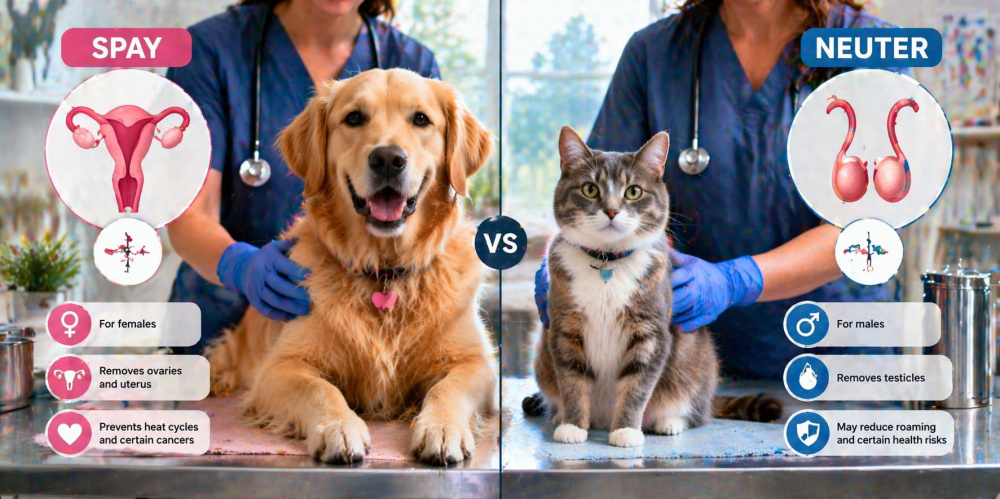
Many people use the terms spay and neuter together, but they are different procedures. Spaying refers to surgery for female pets, while neutering is performed on male pets.
Spaying a female dog or cat involves removing the ovaries and uterus. Because it is a more complex abdominal surgery, it usually costs more than neutering. Neutering a male dog or cat is generally simpler because it involves removing the testicles through a smaller surgical incision.
The type of surgery affects the final cost because female pets usually need:
- Longer anesthesia time
- More surgical supplies
- Larger incision care
- Longer recovery period
- More pain medication
- More monitoring after surgery
Male pets often recover more quickly and may have fewer post-operative restrictions. However, both surgeries still require anesthesia, pain management, and careful recovery instructions.
Pet owners frequently search for “dog spay cost NYC,” “cat neuter cost Queens,” and “female dog spay near me” because the cost difference between male and female procedures can be significant.
Factors That Affect Spay and Neuter Cost in NYC
The cost of spay and neuter surgery can vary widely depending on several important factors. A small young cat will usually cost much less to sterilize than a large adult dog because of differences in anesthesia, surgery time, medication, and recovery needs.
Some of the biggest factors that affect cost include:
- Size of the pet
- Age of the pet
- Gender of the pet
- Breed
- Overall health
- Weight of the animal
- Type of clinic
- Additional services included
Larger dogs often require more anesthesia and more medication, which increases the cost. Older pets may also need more extensive blood work before surgery to make sure they are healthy enough for anesthesia.
Certain breeds may have special surgical risks. Flat-faced breeds such as Bulldogs, French Bulldogs, and Pugs may require additional anesthesia monitoring because of breathing issues. Pets that are overweight or already pregnant can also have more complicated procedures.
Location matters as well. Veterinary clinics in Queens, Manhattan, and other parts of NYC may charge more than clinics in suburban areas because of higher rent, staff costs, and medical equipment expenses.
What Is Usually Included in Spay and Neuter Pricing
When pet owners call a veterinary clinic to ask about spay and neuter cost, it is important to ask exactly what is included in the quoted price. Some clinics provide an all-inclusive package, while others separate each service into individual charges.
A standard spay or neuter package may include:
- Physical exam before surgery
- Anesthesia
- Surgical procedure
- Monitoring during surgery
- Pain medication
- IV catheter
- Basic recovery care
- Follow-up instructions
Some clinics may also include blood work, nail trimming, cone collars, or post-operative medications. Others may charge extra for these services.
Pre-surgical blood work is often recommended, especially for older pets, to make sure there are no hidden health conditions that could make anesthesia riskier. Pain medication is also important because it helps keep the pet comfortable after surgery.
“The cheapest surgery price is not always the best value if important services are not included.”
Pet owners should ask whether follow-up visits, medications, and emergency care are included in the estimate so there are no surprises later.
Low Cost Spay and Neuter Programs in NYC
New York City offers several low-cost spay and neuter options for pet owners who are concerned about affordability. Animal shelters, rescue organizations, and nonprofit clinics often provide discounted surgery programs for dogs and cats.
Low-cost programs may be a good choice for healthy pets that only need a basic procedure. However, they may not include the same level of individualized care, advanced monitoring, or extended follow-up that a full-service veterinary clinic provides.
Low-cost programs are often popular for:
- Cats
- Small dogs
- Rescue animals
- Multi-pet households
- Stray or community cats
These programs can help reduce the number of unwanted litters and make sterilization more accessible for pet owners throughout Queens and NYC.
However, some pet owners prefer private veterinary clinics because they want more personalized care, additional diagnostics, and the ability to discuss other services such as vaccinations, dental care, microchipping, parasite prevention, or wellness exams during the same appointment.
Searches for “low cost spay and neuter NYC,” “cheap cat neuter Queens,” and “affordable dog spay near me” are especially common among owners of multiple pets.

Dog Spay and Neuter Cost in NYC
Dog spay and neuter cost can vary significantly depending on the dog’s size, breed, and gender. Small dogs usually cost less because they require less anesthesia and shorter surgery time. Large breed dogs generally cost more because of increased medication, longer procedures, and more recovery support.
Female dogs are more expensive to spay than male dogs are to neuter because the surgery is more complex. A dog that is overweight, pregnant, or older may also require additional monitoring and blood work before surgery.
Dog owners often choose to combine spay or neuter surgery with other services such as:
- Vaccinations
- Microchipping
- Nail trimming
- Blood work
- Flea and tick prevention
- Dental exam
- Wellness exam
- Heartworm testing
Combining these services can save time and reduce the number of separate vet visits. Many veterinary clinics in Queens offer wellness packages that include surgery along with preventive care.
“Spaying or neutering a dog early can help prevent certain health problems and unwanted behaviors later in life.”
Pet owners searching for “dog neuter cost NYC,” “female dog spay cost Queens,” and “dog surgery near me” are often comparing both private clinics and low-cost programs before making a decision.
Cat Spay and Neuter Cost in NYC
Cats are one of the most commonly spayed and neutered pets in New York City because they can reproduce quickly and contribute to overcrowded shelters if left unsterilized. Spaying and neutering cats is usually less expensive than surgery for dogs because cats are smaller and require less anesthesia.
Male cats generally have a simple neuter procedure with a short recovery period. Female cats require a more complex abdominal surgery, but recovery is still often faster than in dogs.
Many cat owners schedule surgery together with other preventive services such as:
- Rabies vaccine
- FVRCP vaccine
- Deworming
- Microchipping
- Flea prevention
- Wellness exam
Cats should ideally be spayed or neutered before they begin reproducing, spraying, or going into heat. Female cats in heat can become very vocal and may try to escape the home to find a mate. Male cats that are not neutered may spray urine and fight with other cats more often.
Pet owners frequently search for “cat spay cost NYC,” “kitten neuter Queens,” and “low cost cat spay near me” because cat sterilization is considered an important part of responsible ownership.
Best Age for Spay and Neuter Surgery
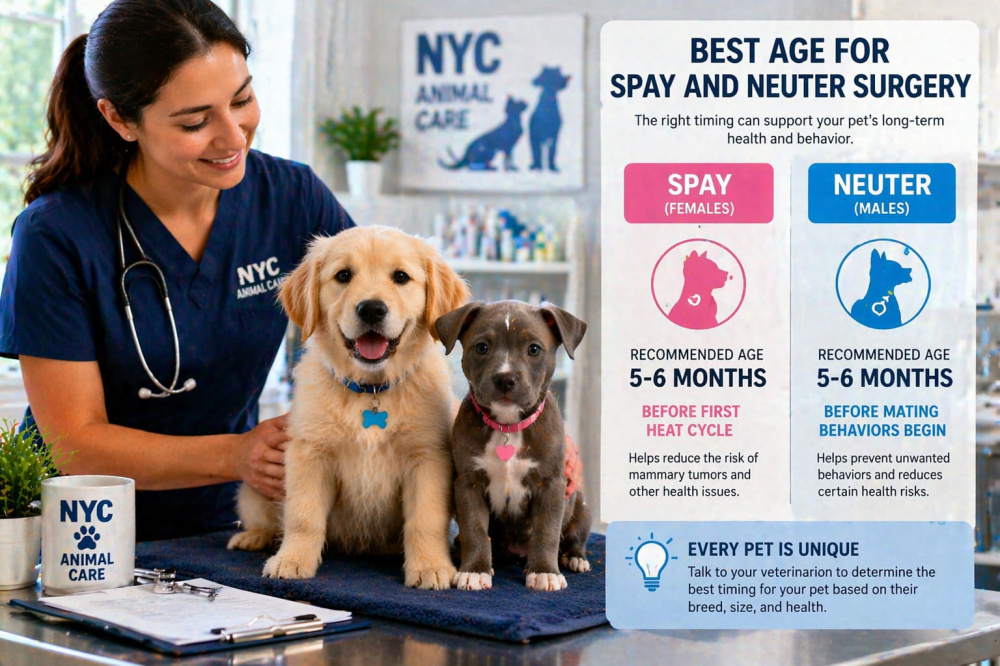
The best age for spay and neuter surgery depends on the species, breed, size, and health of the pet. Many veterinarians recommend surgery during the first year of life, but the exact timing may vary.
Most dogs and cats are spayed or neutered between:
- Four and six months old
- Before the first heat cycle for females
- Before spraying or marking begins
- Before aggressive behavior develops
Some large breed dogs may benefit from waiting longer before surgery because delayed sterilization may support proper bone and joint development. However, small breed dogs and cats are often safely sterilized at a younger age.
Pet owners should discuss the ideal timing with their veterinarian because every pet is different. Waiting too long can increase the risk of pregnancy, behavioral problems, or certain reproductive diseases.
Veterinarians may also recommend earlier surgery for rescue animals, shelter pets, or pets living in homes with other unsterilized animals.
Recovery After Spay and Neuter Surgery
Recovery after spay and neuter surgery is usually straightforward, but pets still need rest and close monitoring. Most dogs and cats return home the same day, although some pets may feel sleepy or less active for the first day because of anesthesia.
Recovery instructions often include:
- Limiting activity
- Preventing jumping or running
- Using a cone collar
- Giving pain medication
- Keeping the incision clean
- Monitoring for swelling or redness
- Avoiding baths for several days
Female pets often need a little more recovery time because spay surgery is more invasive than neutering. Most pets recover fully within one to two weeks.
Pet owners should contact the veterinarian immediately if they notice bleeding, vomiting, swelling, severe pain, or the incision opening. Following post-operative instructions carefully can help avoid complications and reduce the need for additional treatment.
“Most pets recover quickly after spay or neuter surgery when owners follow the veterinarian’s aftercare instructions.”
Additional Costs That May Be Added to Surgery
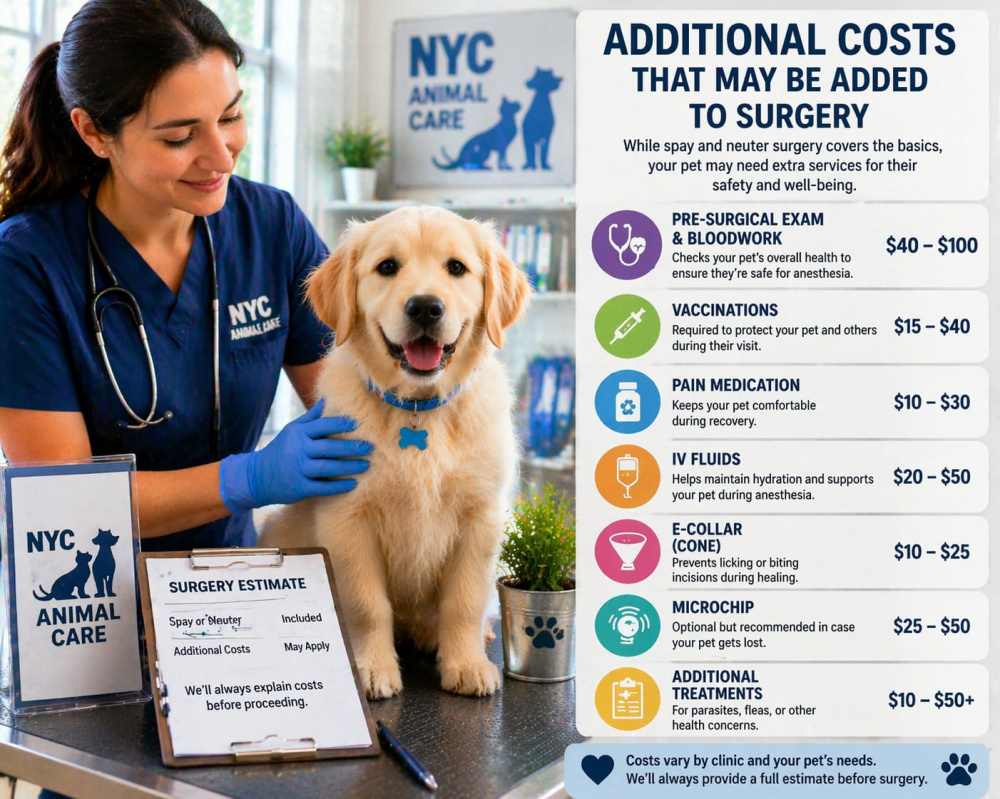
Some pets may require extra services before or after surgery that increase the overall cost. These services are often recommended for safety, comfort, or convenience.
Additional charges may include:
- Blood work
- Pregnancy surgery
- IV fluids
- Extra pain medication
- Cone collar
- Antibiotics
- Overnight stay
- Microchip implantation
Pregnant pets or pets in heat may require more complicated surgery and additional anesthesia time. Older pets may also need more advanced blood testing before anesthesia is considered safe.
Pet owners should always ask for a written estimate before surgery so they know what is included and what may cost extra.
Choosing the Right Veterinary Clinic in Queens NYC
Choosing the right clinic for spay and neuter surgery is important because not all veterinary practices provide the same level of care. Some clinics focus mainly on low-cost procedures, while others offer advanced monitoring, blood work, and personalized follow-up care.
When comparing veterinary clinics in Queens and NYC, ask about:
- Whether blood work is included
- What type of anesthesia monitoring is used
- Whether pain medication is included
- What happens if complications occur
- Whether the clinic provides follow-up visits
- If emergency care is available after surgery
A trusted veterinary clinic should explain the procedure clearly, provide transparent pricing, and answer questions about recovery and aftercare. They should also discuss your pet’s breed, age, health, and individual needs before scheduling surgery.
Pet owners often search for “best spay and neuter clinic Queens,” “dog neuter near me,” and “cat spay NYC” because they want affordable pricing without sacrificing safety and quality.
Final Thoughts on Spay and Neuter Cost in NYC
Spay and neuter surgery is one of the most important investments pet owners can make in their dog’s or cat’s health. While the cost varies depending on the pet’s size, age, gender, and medical needs, the long-term benefits often outweigh the initial expense.
These procedures can help reduce unwanted litters, improve behavior, prevent certain diseases, and lower the risk of future medical problems. Whether you choose a low-cost clinic or a full-service veterinary practice in Queens or NYC, it is important to ask what is included in the price and schedule the procedure at the right age.
If your dog or cat has not yet been spayed or neutered, now may be the right time to book a consultation, discuss pricing, and schedule surgery with a trusted veterinary clinic.