


Dog Hit by Car First Aid – What to Do Immediately and Emergency Care in Queens NY
- Why Being Hit by a Car Is a Life Threatening Emergency for Dogs
- Stay Calm and Secure the Scene First
- Assess Your Dog’s Breathing and Responsiveness
- Control External Bleeding Immediately
- Minimize Movement to Prevent Further Injury
- Recognizing Signs of Shock After Trauma
- What Not to Do After Your Dog Is Hit by a Car
- Emergency Veterinary Treatment in Queens NY
- Common Injuries Seen in Dogs Hit by Cars
- Recovery and Follow Up Care After Trauma
- When Every Minute Counts
Why Being Hit by a Car Is a Life Threatening Emergency for Dogs
When a dog is hit by a car, the situation is always considered a medical emergency — even if the dog appears alert or able to stand. Trauma from a vehicle impact can cause internal bleeding, lung injury, fractures, head trauma, and spinal damage that are not immediately visible.
In Queens, NY, with busy intersections, residential traffic, and crowded streets, vehicle-related injuries are unfortunately common. Dogs may escape a yard, slip out of a leash, or become startled by loud urban noise. The impact force from even a low-speed collision can cause severe internal trauma.
Many pet owners make the mistake of assuming that if a dog can walk after being hit, it is safe to monitor at home. This is dangerous. Internal hemorrhage and organ damage may progress over hours.
“After a car accident, the most serious injuries are often the ones you cannot see.”
Immediate first aid followed by urgent veterinary evaluation significantly improves survival outcomes.
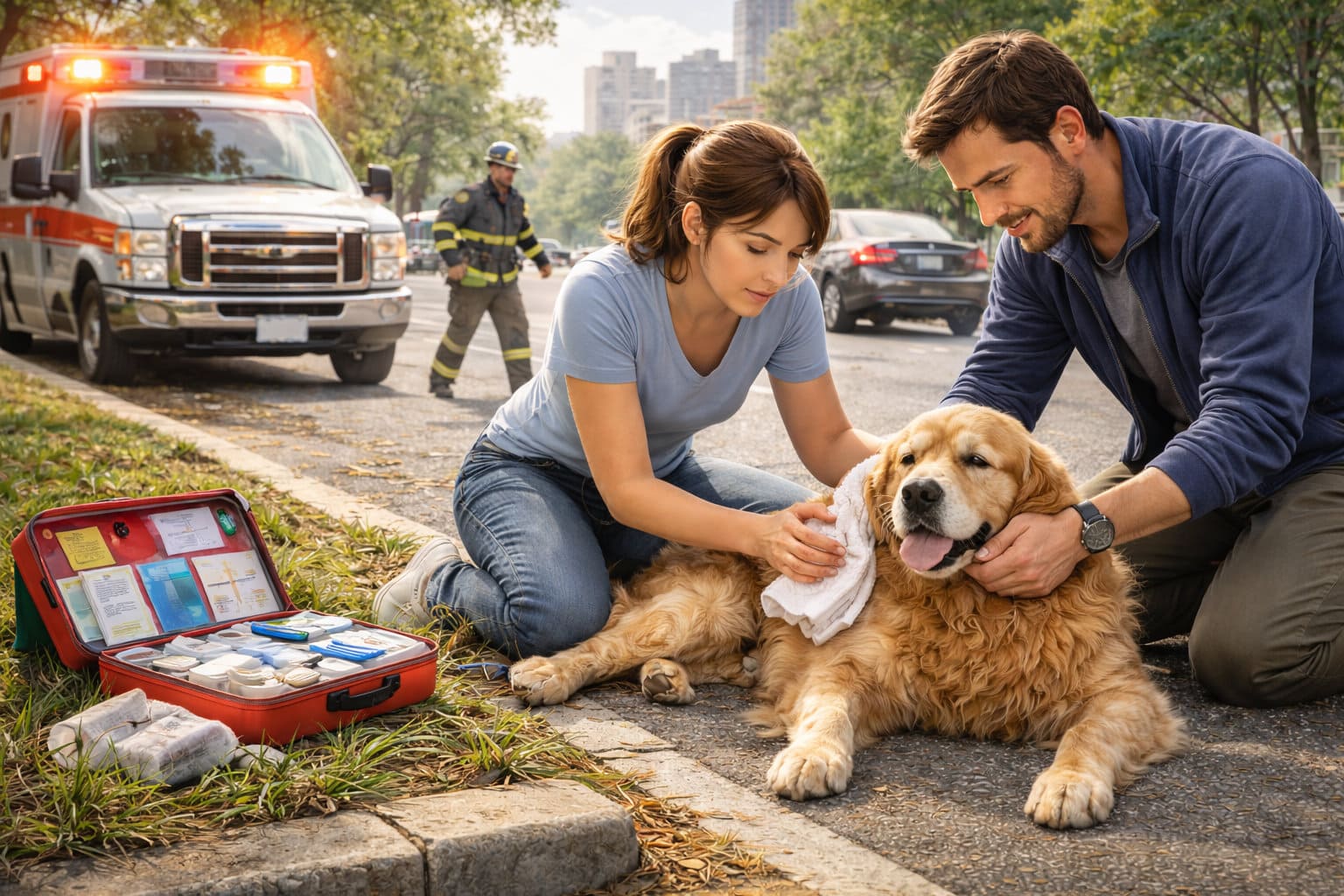
Stay Calm and Secure the Scene First
Your safety comes first. Traffic accidents create chaotic environments. Before approaching your dog, assess the surroundings and ensure you are not stepping into active traffic.
If possible:
- Move the dog out of the roadway carefully
- Ask someone to control traffic if needed
- Prevent the dog from running due to fear or shock
- Use a leash, belt, or cloth if a collar is unavailable
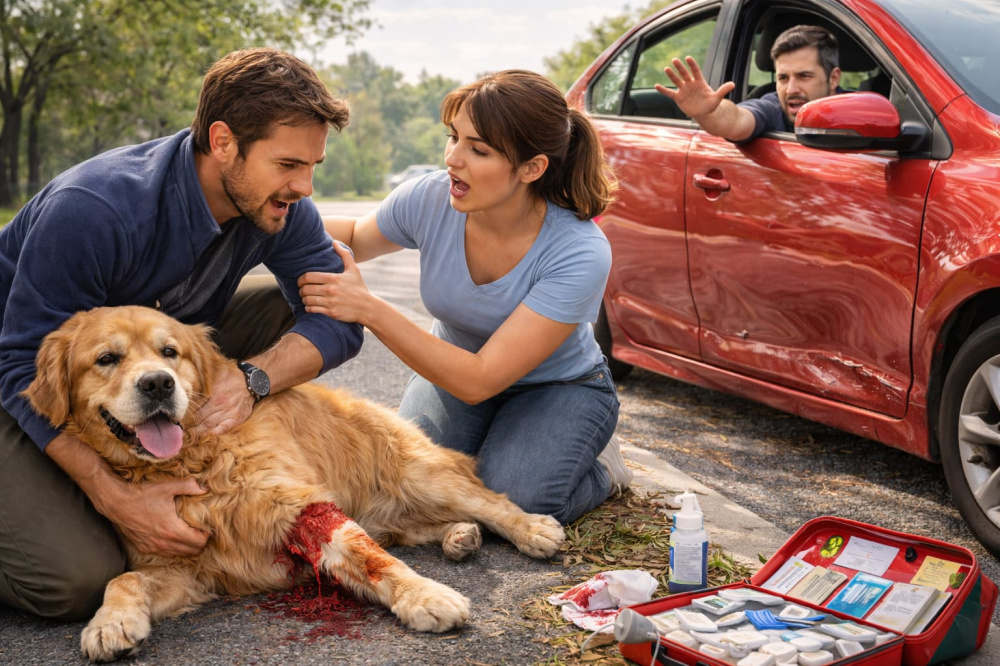
Even the most gentle dog may bite when in severe pain. Approach slowly and speak calmly. Avoid sudden movements.
If your dog is conscious but panicking, stabilize them without forcing movement. Excessive handling may worsen spinal or internal injuries.
Securing the area prevents further trauma and allows you to begin first aid safely.
Assess Your Dog’s Breathing and Responsiveness
Once your dog is in a safer location, quickly evaluate vital signs. Check whether your dog is conscious and responsive. Call their name gently.
Look for breathing by observing chest movement. If you do not see breathing, check for airflow near the nose. If there is no breathing and no heartbeat, cardiopulmonary resuscitation may be necessary.
Initial assessment steps:
- Check breathing
- Check pulse on the inner thigh
- Look for severe bleeding
- Observe gum color
Pale or white gums may indicate shock or internal bleeding. Blue gums suggest oxygen deprivation.
Do not delay transport to a veterinary clinic in Queens while performing prolonged assessment. Quick stabilization and transport are critical.
Control External Bleeding Immediately
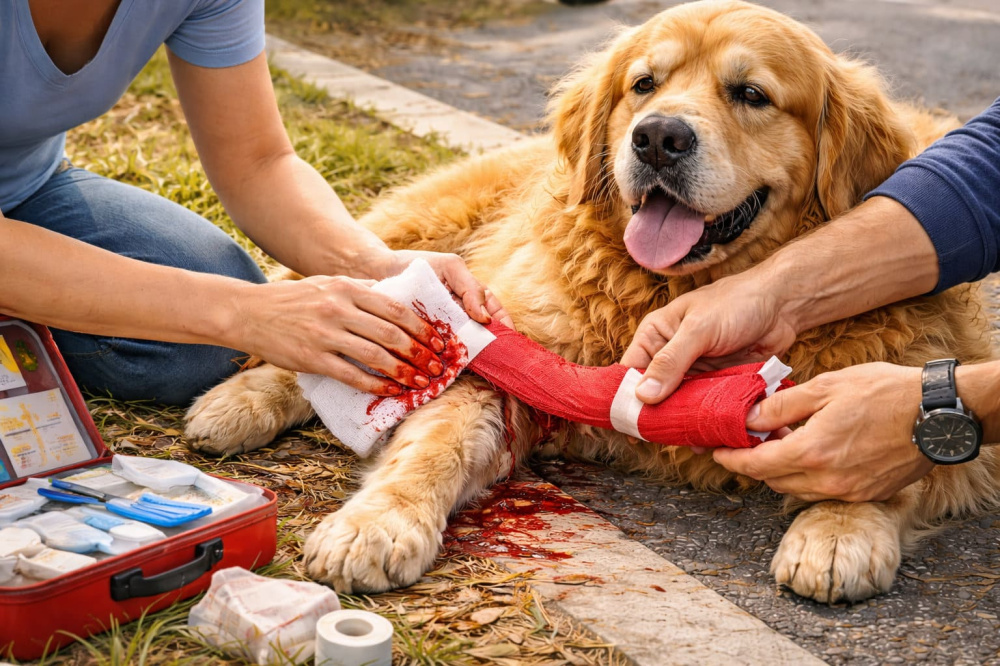
External bleeding must be addressed right away. Apply direct pressure to the wound using clean cloth, gauze, or even a shirt if necessary.
If bleeding is severe:
- Apply firm, continuous pressure
- Do not remove objects embedded in the wound
- Avoid repeatedly lifting the cloth to check bleeding
- Elevate the limb slightly if possible
If blood soaks through, place another layer on top instead of removing the first. Removing the initial cloth can disrupt clot formation.
Severe blood loss can become life threatening within minutes.
Even if bleeding appears controlled, internal hemorrhage may still be present. Immediate veterinary care is essential.
Minimize Movement to Prevent Further Injury
Spinal injuries are common after car accidents. Improper handling can worsen neurological damage. If possible, move your dog onto a flat, rigid surface such as a board, large book, or blanket used as a stretcher.
Avoid twisting the neck or spine. Keep the body aligned. If multiple people are available, coordinate lifting carefully.
Signs that may indicate spinal injury include:
- Inability to stand
- Dragging limbs
- Uncoordinated movement
- Severe pain when touched
Do not attempt to “test” mobility repeatedly. Limit movement and transport to an emergency veterinarian in Queens immediately.
Recognizing Signs of Shock After Trauma
Shock is a common and dangerous consequence of trauma. It occurs when blood circulation is inadequate to deliver oxygen to tissues.
Symptoms of shock include:
- Pale or white gums
- Rapid weak pulse
- Cold extremities
- Rapid breathing
- Lethargy or collapse
Keep your dog warm using a blanket during transport. Do not overheat, but maintain body temperature.
“Shock can progress silently even when visible injuries appear minor.”
Prompt IV fluid therapy at a veterinary hospital is critical to stabilize circulation and prevent organ failure.
What Not to Do After Your Dog Is Hit by a Car
In emergencies, well-intentioned actions can sometimes cause harm. Avoid giving food, water, or medications unless directed by a veterinarian.
Do not:
- Give human pain medications
- Force your dog to stand or walk
- Delay veterinary care to “see if it improves”
- Attempt to set broken bones
Pain medications such as ibuprofen are toxic to dogs. Attempting home treatment may worsen internal injuries.
Even if your dog seems stable, professional evaluation including X-rays and bloodwork is necessary.
Emergency Veterinary Treatment in Queens NY
Once at a veterinary clinic, the medical team will prioritize stabilization. Trauma patients are assessed using airway, breathing, and circulation protocols.
Treatment may include:
- Oxygen therapy
- IV fluids for shock
- Pain management
- Blood tests
- X-rays or ultrasound to detect internal bleeding
- Surgery if internal injuries are identified
Hospitalization is often required for monitoring. Internal bleeding, lung contusions, or abdominal organ damage may not be immediately apparent.
If you are concerned about treatment options, recovery expectations, or overall price, our Queens veterinary clinic can provide clear guidance and help you schedule an emergency appointment immediately.
Common Injuries Seen in Dogs Hit by Cars
Vehicle trauma can cause multiple injuries simultaneously. The most common include fractures, pelvic injuries, internal bleeding, lung bruising, and head trauma.
Internal injuries may involve the spleen, liver, or bladder. Pulmonary contusions can impair oxygen exchange and may worsen over 24–48 hours.
Common traumatic injuries include:
- Broken limbs
- Pelvic fractures
- Abdominal hemorrhage
- Collapsed lung
- Traumatic brain injury
Each injury requires individualized treatment. Some cases need emergency surgery, while others require intensive supportive care.
Early diagnosis dramatically improves survival outcomes.
Recovery and Follow Up Care After Trauma
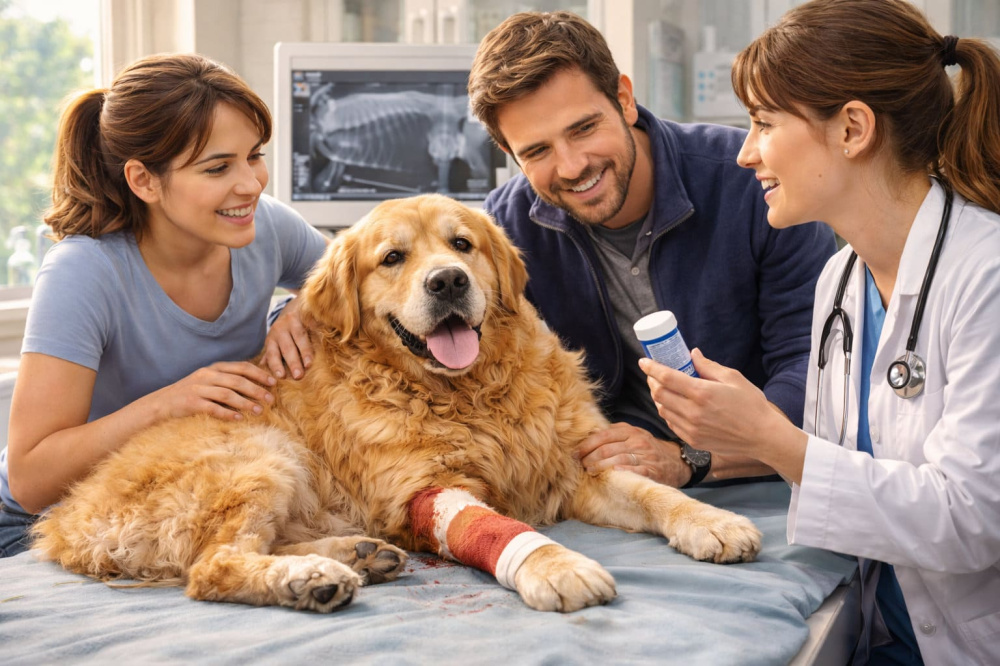
Recovery depends on injury severity. Some dogs recover fully with prompt treatment, while others may require weeks of restricted activity and rehabilitation.
Follow-up care may include repeat imaging, bloodwork, wound management, and physical therapy. Pain control is essential for healing.
Owners should monitor:
- Appetite changes
- Breathing difficulty
- Swelling or bruising
- Behavioral changes
Long-term prognosis improves with early intervention and strict adherence to veterinary recommendations.
Preventive strategies such as secure leashes, fenced yards, and microchipping are essential in busy areas like Queens.
When Every Minute Counts
A dog hit by a car should always be treated as an emergency. Even when injuries appear minor, internal trauma may be life threatening.
Immediate first aid, careful handling, and rapid transport to a veterinary clinic in Queens NY provide the best chance for survival.
If your dog has been involved in a vehicle accident, contact our veterinary team right away to schedule an emergency appointment. Rapid action protects organ function, reduces complications, and gives your dog the highest chance of recovery.